Insight
IT Operations: Why Integration is Now the Answer
The Increasingly Complex IT Operations Environment
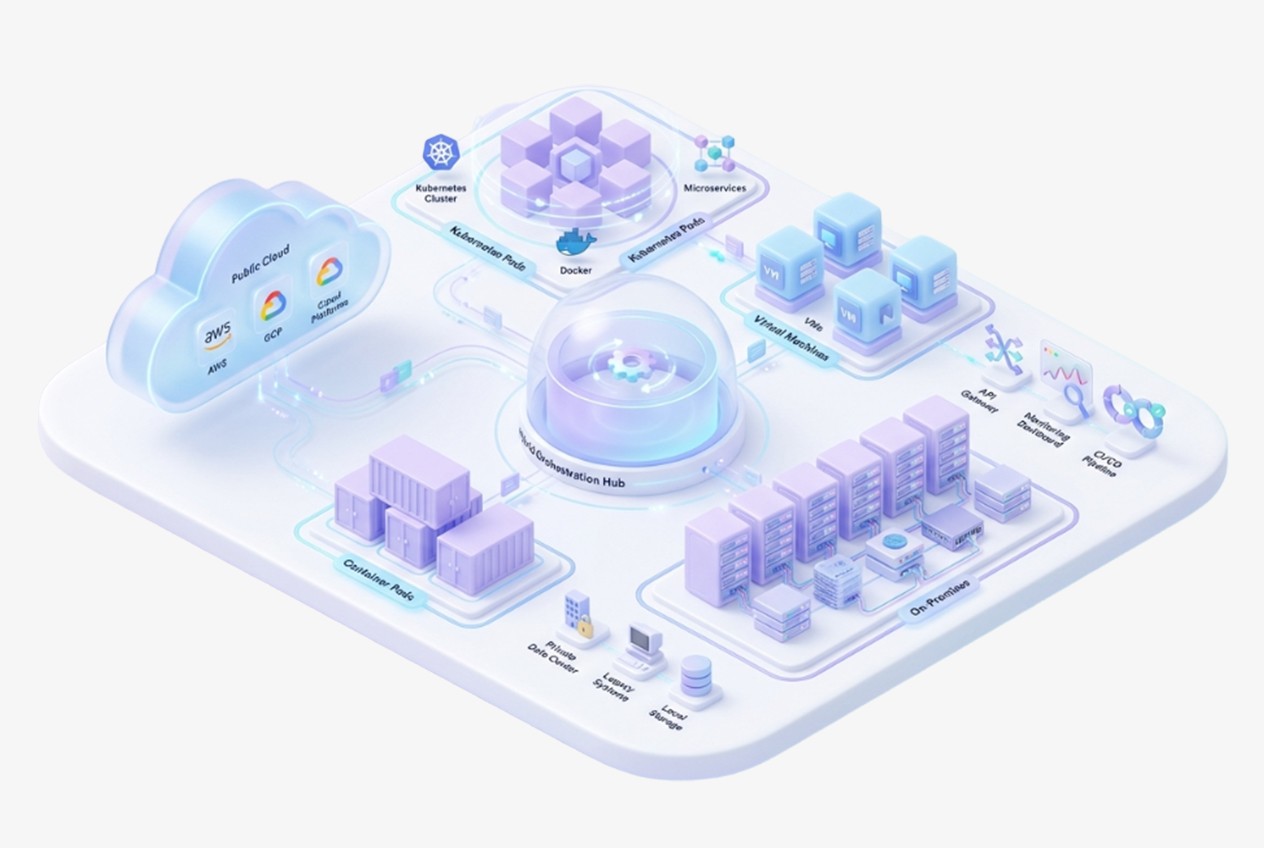
If there is one word to describe modern IT operations, "complex" is the first that comes to mind. Servers, networks, applications, and databases are just the start; with the addition of cloud, Kubernetes, and MSA architectures, operations environments continue to expand. The problem is that the tools used to manage these environments are also fragmented. Operators must jump between multiple systems and screens to monitor conditions, which naturally increases the operational burden.
Inefficiencies Born from Fragmented Operations
As operational environments become more fragmented, the first issue that arises is the difficulty of viewing the entire flow at a single glance. The same applies when a service outage occurs. Operators must check servers, networks, applications, and databases individually, which inevitably delays identifying the root cause. Ultimately, this prolongs incident response times, leading directly to a decline in service quality.
Particularly in environments where multiple systems are interconnected, it is difficult to find the root cause by looking at just one area. It is a structure where accurate judgment is only possible when the correlations between different systems are viewed together.
Operational Standards Shifting Towards Service-Centricity
Amidst these changes, the standards of IT operations are also shifting. While it was common in the past to operate with an infrastructure-centric focus, it has now become crucial to view things from a service-centric perspective. This is because what users actually experience is the service, not the servers or the network.
Therefore, rather than managing each system separately, there is a need for a perspective that views all elements together within a single service flow. Understanding servers, networks, applications, and databases as interconnected entities is becoming increasingly important.
Why Integrated IT Operations is Necessary
The concept that has emerged from this trend is Integrated IT Operations. Integrated operations is not simply about gathering multiple features in one place; it is a structure that connects various data points so that the entire flow can be grasped at once and analyzed quickly.
In an integrated environment, root causes can be identified much faster when an outage occurs, and operational efficiency is also significantly improved. As the work of switching between multiple tools is reduced, operators can focus on more critical decision-making and responses.
Moving Beyond Integration to AI-Powered Operations
Recently, another shift is taking place as AI is combined with this integrated operations approach. It is evolving to automatically detect anomalies based on data, analyze root causes, and recommend necessary information.
This also means that IT operations are shifting from traditional, experience-driven methods to data-driven and automated operational practices. Especially when utilizing AI in an integrated environment, higher accuracy and efficiency can be expected, reducing repetitive analytical tasks and enabling more proactive responses.
In today's IT operations environment, the limitations of a fragmented approach are clear. An integrated perspective is essential for fast and accurate operations within complex systems, and with the addition of AI-powered analysis, IT operations are moving to the next level.
Now, the direction of IT operations is becoming clear: integration over fragmentation, and intelligence over manual labor. This trend will only accelerate in the future.
Author: JS Shin | NKIA Solution Consulting Team


