Article
Monitoring vs. Observability
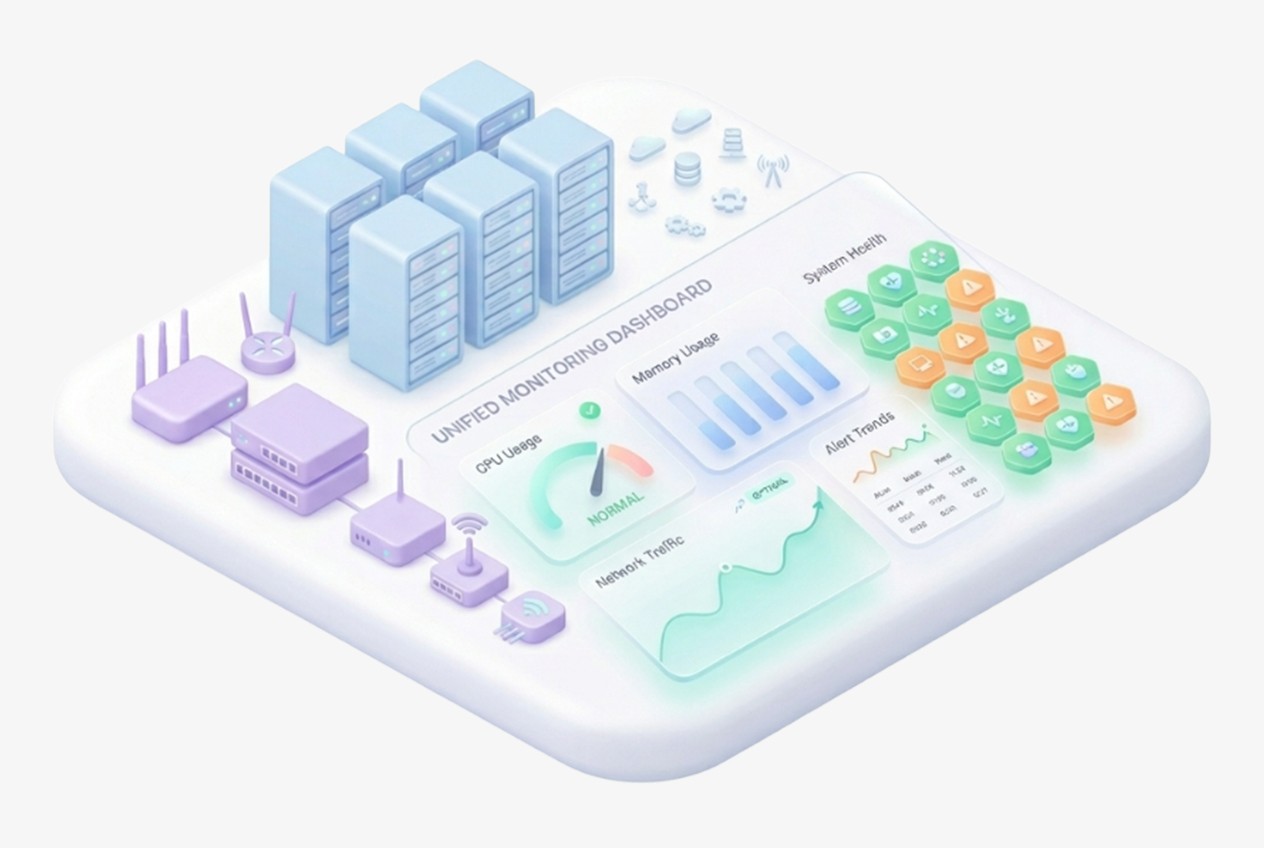
What is Monitoring
Monitoring is the continuous checking of a system's status. It is a fundamental operational activity to verify whether servers, networks, and applications are functioning normally using various metrics. For example, system status is evaluated based on metrics such as CPU utilization, memory status, and network traffic.
In other words, the core role of monitoring is to check the current status based on predefined criteria and detect any anomalies. In most environments, it is operated by setting thresholds and generating alarms when they are exceeded.
Limitations of Monitoring
While monitoring is an essential function, it does not solve all problems. Its limitations become clearly apparent, particularly in situations like the following.
There are cases where server CPU, memory, and network metrics are all normal, but the actual users feel that the service is slow. In such situations where "metrics are normal but the service is abnormal," it is often difficult to find the cause through simple monitoring alone.
This is because monitoring tells you "what happened," but it cannot explain "why it happened." In the end, operators have to manually check logs or jump between multiple systems to perform additional analysis.
What is Observability
Observability is a concept that emerged to complement these limitations, referring to the ability to infer the internal state of a system and analyze the root causes of problems.
To achieve this, observability utilizes three types of data together: logs, metrics, and traces. Logs record events and states occurring in the system, metrics represent performance and status numerically, and traces show how service requests flow through the system.
By analyzing these three data types together, you can go beyond simply knowing that a problem has occurred, to identifying in which section the problem occurred and what its root cause is.
Key Differences: Monitoring vs. Observability
Monitoring and observability may seem similar, but there are clear differences in their purposes and how they are utilized.
Monitoring is focused on identifying what happened, whereas observability is focused on analyzing why it happened. In other words, if monitoring is status checking, observability can be seen as root cause analysis.
The two concepts are not mutually exclusive, but rather demonstrate greater effectiveness when used together.
Differences in Actual Operations
In real-world operational environments, the difference between the two concepts is even more pronounced.
In a situation where service slows down, monitoring may stop its analysis at the level of checking server or network status. In observability, however, you can follow the flow of service requests to analyze in which section delays occurred, which transactions are affected, and even connect the analysis to which database query or code caused the problem.
This ability to grasp problems based on the entire service flow, rather than on an individual system unit, is the biggest difference of observability.
Both monitoring and observability play crucial roles in IT operations, but their approaches and purposes are distinctly different. Today, IT operations are moving beyond simply checking status toward rapidly understanding and responding to the root causes of problems.
Going forward, utilizing both concepts together will be an essential element for stable operations.
In the next post, we will look into AIOps, which is receiving a lot of attention these days.
Author: JS Shin | Nkia Solution Consulting Team


